| 22 July 2026
How Secure and Scalable Is Your IT?
IT security for small businesses is no longer something you can leave until later. Every business, whatever its size, now relies on computers, networks and data to get through the working day. That means every business is also a target. At the same time, your IT needs to grow with you.
This article sets out ten simple questions to help you check how secure and how scalable your current IT setup really is. You do not need technical knowledge to follow along.
Table of Contents
1. Do you know exactly where your data is stored?
Many small businesses are not sure whether their data sits on a local computer, a shared drive or a cloud service. This matters because it affects how well your data is protected, backed up and kept away from people who should not see it.
If you cannot answer this clearly, it is worth finding out. A quick review of where your files and systems live, is the first step Omnia Systems often takes with a new client.
2. Is your software kept up to date?
Out of date software is one of the most common ways criminals get into a business. Updates often contain fixes for known security gaps, so missing them leaves the door open.
If updates are being missed or delayed across your business, this is a simple but important area to fix. Keeping systems current is one of the easiest wins when it comes to IT security for small businesses.
3. Who has access to what?
Not every member of staff needs access to every file or system. Reviewing who can see what and removing access as soon as someone leaves the business, is a basic step that many companies overlook.
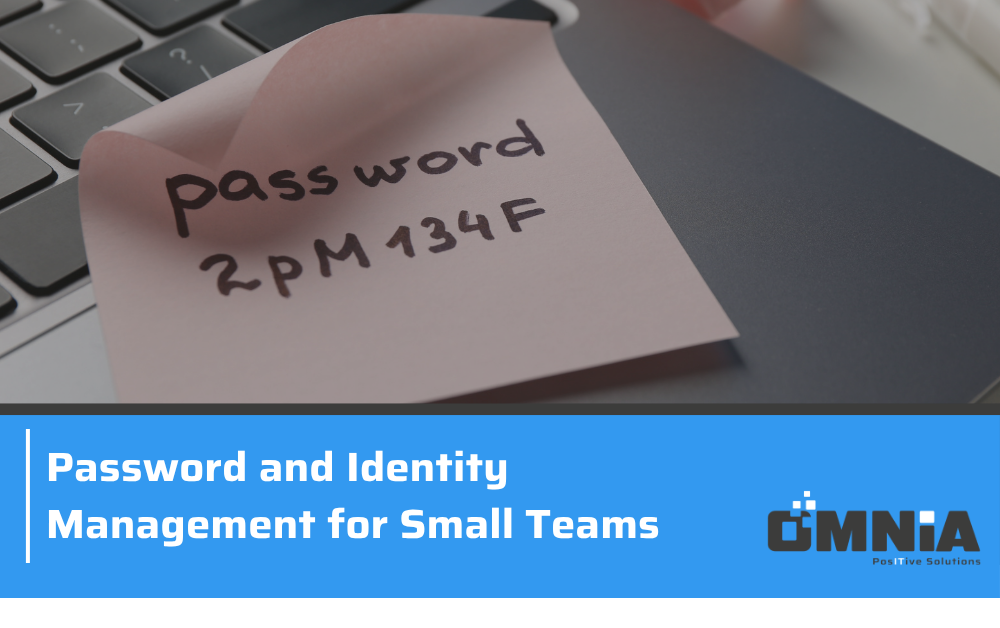
Weak or reused passwords often make this problem worse. Introducing a password manager, and requiring different passwords for different systems, is a straightforward way to tighten this up.
4. If your systems failed today, could you recover your data?
A proper backup should be automatic, regular and tested. Many businesses assume their backups work, only to discover a problem when it is too late.
Rather than setting up a backup and forgetting about it, Omnia Systems recommends testing backups regularly, so you know for certain that your data can be recovered when you need it most.
5. How long would it take you to get back up and running after a problem?
This is often called recovery time. A business that can recover within hours is in a far stronger position than one that might take days.
Knowing this figure in advance, rather than finding out during an emergency, allows you to plan properly and set realistic expectations with your customers and staff.
6. Can your current systems support more staff or more customers?
Some IT setups work well for a small team but slow down or become unreliable as a business grows. If you are planning to expand, it is worth checking whether your systems can grow with you.
This is where scalable IT becomes just as important as secure IT. Systems that are built with growth in mind save businesses from a costly rebuild further down the line.
7. Are you paying for tools you no longer use, or missing tools you now need?
As businesses grow, their needs change. Regularly reviewing your software and systems ensures you are not wasting money on things you no longer use, and that you have the right tools for where your business is heading.
This kind of review is something Omnia Systems carries out regularly with clients, so spending stays sensible as the business changes.
8. Is your IT set up to support remote or flexible working?
Many small businesses now offer some form of remote or hybrid working. Your IT should allow staff to work securely from different locations without creating extra risk.
If your current setup was not designed with remote access in mind, this is worth addressing sooner rather than later, particularly as flexible working becomes more common.
9. If something went wrong, would you know who to call?
Having a clear point of contact for IT problems, rather than relying on guesswork or a single staff member’s personal knowledge, makes a real difference when something goes wrong.
This is one of the main reasons businesses choose to work with a managed service provider such as Omnia Systems. Instead of scrambling to find help during a crisis, you have a dedicated team who already understand your systems.
10. Do you have ongoing monitoring, or do you only find out about problems after they happen?
Many small businesses only discover an IT issue once it has already caused disruption. Ongoing monitoring can catch problems early, often before staff or customers even notice.
A managed service provider takes care of this kind of monitoring in the background, alongside keeping software updated, managing backups and advising on new tools as your business grows. This means IT security for small businesses becomes something that is looked after continuously, rather than something you only think about when things go wrong.
Next Steps
IT security for small businesses is not about doing everything at once. It is about understanding where you stand today and taking sensible steps to improve things over time. The ten questions in this article are a good place to start, whether you are checking your security, planning for growth, or both.
You do not need to work through this alone. Get in touch with Omnia Systems today to arrange a friendly, no obligation conversation about your IT security and how we can help your business grow with confidence.
Let us manage your IT so you can concentrate on what matters most: your business.